Oil Producer Azerbaijan Pivots Toward Large-Scale Renewable Energy Expansion
Key Takeaways
- •Azerbaijan aims to raise renewables to 30 percent of its energy supply and cut greenhouse gas emissions 40 percent from 1990 levels by 2030, potentially reaching up to 38 percent clean power.
- •The World Bank approved the AZURE project in March 2025 with a $173.5 million IBRD loan to upgrade transmission infrastructure and attract an initial $384 million in private renewable investment.
- •Azerbaijan has designated 711.4 km² of Caspian Sea waters for offshore wind development and signed multiple agreements with Chinese firms, including a 200 MW offshore wind exploration deal.
- •BP will build a $200 million, 240 MW solar plant in Karabakh targeted for completion by mid-2027, while the ACWA Power-operated 240 MW Khizi-Absheron wind farm is already fully operational.
- •Three planned green energy corridors could transport 10 GW of renewable electricity, positioning Azerbaijan as a clean energy exporter to Europe and Central Asia.
Azerbaijan, one of the world's oldest oil producers and exporters, has pumped crude since the mid-19th century and remains a major global producer. The country has long depended on oil and gas both to meet domestic energy demand and as a key driver of its economy. That dependence is now shifting: the host of the 29th UN Climate Change Conference (COP29) in 2024 is moving to diversify its energy mix by deploying substantially more renewable energy capacity, a pivot that mirrors broader efforts by other hydrocarbon-reliant Caspian and Gulf producers to build non-oil revenue streams before long-term demand for fossil fuels erodes.
Natural gas supplied 67 percent of Azerbaijan's energy in 2023, according to the IEA, while oil and oil products accounted for 31.1 percent. Hydropower and other renewable sources contributed less than 2 percent of the mix. Although hydrocarbons still account for nearly half of Azerbaijan's GDP, the government has laid out major plans to expand renewable energy capacity in order to support diversification and strengthen energy security. The starting point is small — the leap to a 30 percent renewable share by 2030 implies scaling capacity more than fifteenfold from today's base.
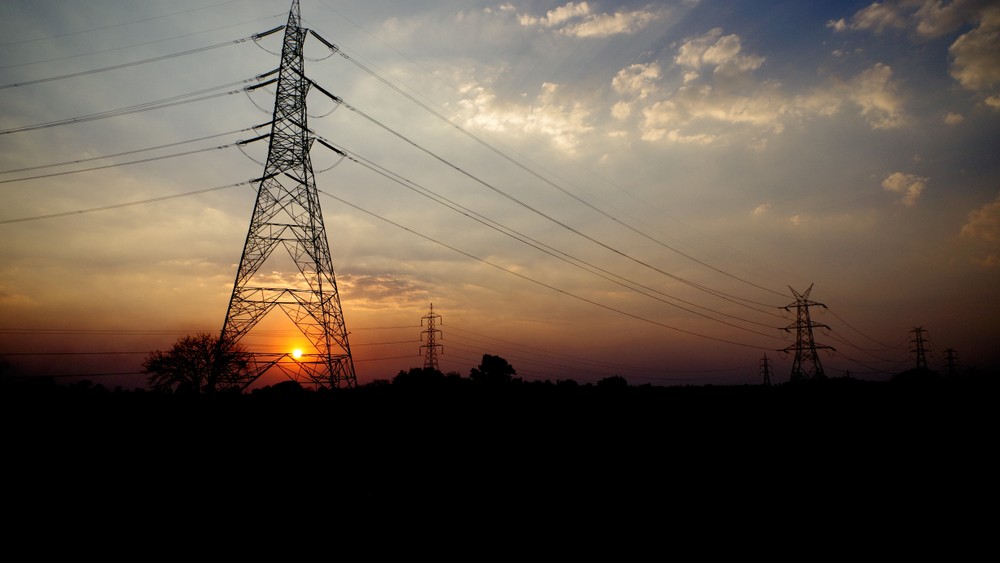
In March 2025, the World Bank approved the Azerbaijan Scaling-Up Renewable Energy Project (AZURE), designed to strengthen the country's power transmission network, support energy diversification, and meet growing electricity demand. A $173.5 million loan from the International Bank for Reconstruction and Development (IBRD) is expected to help expand and modernise Azerbaijan's energy infrastructure and encourage private investment in its renewable energy sector, particularly onshore wind. The initiative forms part of the World Bank's Europe and Central Asia Renewable Energy Scale-up (ECARES) multi-year programme and is expected to attract an initial $384 million in private investment. The emphasis on transmission reflects a common bottleneck for fast-scaling renewable markets: generation projects often outpace the grid infrastructure needed to carry their output.
In November 2025, Azerbaijan updated its national climate action plan with ambitious renewable energy targets. The country now aims to cut greenhouse gas emissions by 40 percent from 1990 levels and to raise the share of renewables in its energy supply to 30 percent by 2030. Given significant progress in renewable expansion in recent years, Azerbaijan may surpass this target, generating up to 38 percent of its power from clean sources.
Favourable policies introduced in recent years have encouraged greater investment in renewable energy development, including tax breaks for projects valued at up to $17.7 million and for renewable facilities with installed capacity above 100 MW. These measures have already helped attract investors, with the 240-megawatt Khizi-Absheron Wind Farm commissioned in January 2026 and the Garadagh Solar Power Plant in the Caspian region approved in 2023 — a facility that generates enough electricity to power 110,000 homes.
The government is also prioritising the development of "green energy corridors," including plans for a high-voltage transmission line running under the Black Sea into Georgia. Developing these routes is expected to position Azerbaijan as a major renewable energy exporter to Central Asia and Europe while diversifying energy trade routes across the region — a prospect that aligns with European Union efforts to import more green electricity and hydrogen from neighbouring regions as part of its own decarbonisation agenda.
Amin Mammadov, Deputy Chairman of the Public Council under the Ministry of Ecology and Natural Resources, explained: "Azerbaijan has been an energy hub for a very long time… We want to also do that for green energy." The three main routes under focus are the Caspian-Black Sea-Europe Corridor, the Azerbaijan-Türkiye-Europe Corridor, and the Central Asia-Azerbaijan-Europe Corridor. Together, once complete, the three corridors are expected to be capable of transporting 10 GW of renewable electricity.
In 2022, Azerbaijan signed a Strategic Partnership Agreement on Green Energy Development and Transmission with Georgia, Romania, and Hungary, supporting the development of a green energy corridor to Europe.
In July, Azerbaijan unveiled major offshore wind plans, designating 711.4 km² of Caspian Sea waters as a renewable energy zone for offshore wind development. The move followed a recent agreement between Azerbaijan's Energy Ministry and Clean Energy Capital, a subsidiary of Azerbaijan Green Energy Company, under which the firm will conduct research on an offshore wind project in a designated area of the Caspian Sea. Offshore capacity would add substantially to the country's resource base, as the Caspian region's strong and steady winds make it well suited to utility-scale wind development.
In June 2025, Azerbaijan's Energy Ministry also signed a deal with China Energy Engineering Corporation to explore the development of a 200 MW offshore wind project. The Ministry had signed two further agreements with Chinese firms for offshore wind development earlier that year. The agreements illustrate how Chinese companies, which dominate the global offshore wind supply chain, have become key partners for emerging renewable markets.
Azerbaijan additionally signed agreements with BP in June 2025 to develop a $200 million, 240 MW solar power plant in Karabakh, which BP aims to complete by mid-2027. Meanwhile, ACWA Power's 240 MW Khizi-Absheron Wind Farm — the country's first large-scale, independently developed wind project — became fully operational last year and is expected to supply clean power to more than 300,000 Azerbaijani households.
While Azerbaijan intends to continue producing oil and gas, the government also has major plans for the country's renewable energy sector. Expanding clean energy capacity through wind, solar, hydropower, and battery storage projects will help diversify the electricity mix and enhance energy security. At the same time, the creation of green corridors connecting Asia and Europe will support Azerbaijan's emergence as a clean energy and trade hub. Key milestones ahead include the delivery of the BP Karabakh solar plant by mid-2027, the outcomes of the Caspian offshore wind studies, and progress on the cross-border transmission links that will determine whether the corridor ambitions translate into actual export capacity.
Source: OilPrice.com — by Felicity Bradstock
