Armyworm Reports Increase in Parts of Missouri
Key Takeaways
- •University of Missouri Extension agronomist Travis Harper reports high armyworm populations in parts of Missouri, especially in summer annual forage crops like pearl millet.
- •Armyworm infestations can defoliate forage plants rapidly and reduce second-cutting hay yields or fall grazing potential.
- •The pest is active at night, favors drier areas, and drought is expanding, with the U.S. Drought Monitor showing 15 percent of Missouri in moderate drought.
- •Farmers are advised to scout fields daily, checking under surface debris early or late in the day to detect armyworms.
- •Insecticides can control armyworms, and labeled applications are most effective when timed against smaller larvae.
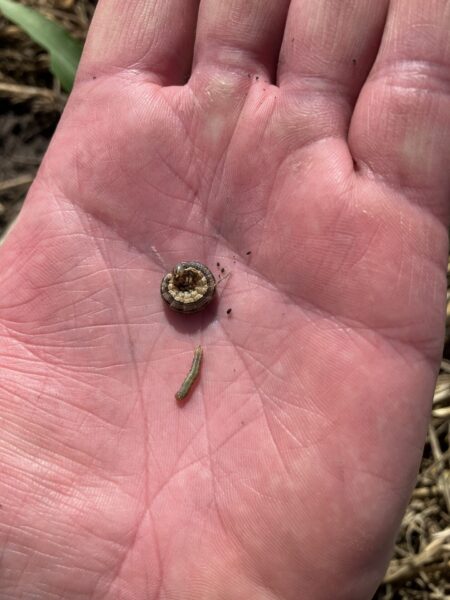
Armyworm activity is being reported across portions of Missouri, according to an agronomist with University of Missouri Extension.
"We're always watching for it and so far this year, we've had some reports," says Travis Harper, who serves with University of Missouri Extension in Clinton County. "We have seen some high populations, especially in some summer annual forage crops like pearl millet."
Once armyworms establish in a field, they strip the leaves off forage plants and grasses, and Harper says they can do a large amount of damage in a short time. Armyworms, including the fall armyworm, are a recurring late-summer pest in Missouri forage and turfgrass, and university extension services across the Midwest routinely issue annual scouting guidance as part of integrated pest management programs.
"When that's happening this time of the year, it will affect us on a second hay cutting or if we're going to use that field for some fall grazing. An armyworm infestation can really reduce either our hay yields or potential grazing for the fall," he says.
Harper notes that the pest is active at night and is usually found in drier areas. Drought is expanding across the state, with the U.S. Drought Monitor showing 15 percent of Missouri in moderate drought.
He advises farmers to closely monitor their fields each day, watching for plant damage.
"You kind of need to dig down, underneath the stuff on the top of the soil. Look underneath for armyworms. Early in the morning or late in the evening is a good time to do that," he says.
Harper says armyworms can be controlled with insecticides. Missouri Extension guidance generally recommends scouting before treatment and notes that labeled insecticide applications are most effective when timed against smaller larvae, underscoring why early detection matters for forage producers weighing input costs against potential forage losses.
Source: Brownfield Ag News
