The Week in Alternative Fuels: A Growing Divide in the ARA Bunker Market
Key Takeaways
- •Rotterdam has trailed Antwerp in conventional bunker volumes for two consecutive quarters following the Netherlands' early implementation of the EU Renewable Energy Directive (RED III), which raised costs for conventional fuel suppliers.
- •Rotterdam's biofuel blend sales more than doubled from roughly 105,000 metric tons in Q1 to approximately 240,000 metric tons in Q2 2026, driven by improving economics and shrinking biofuel premiums.
- •Rotterdam recorded bio-methanol deliveries of around 3,000 metric tons and its first ethanol bunker sales of approximately 1,000 metric tons in Q2 2026, while only liquefied biomethane volumes declined.
- •Antwerp's bio-bunker sales grew from about 21,000 to nearly 27,000 metric tons over the same period but remained significantly below Rotterdam's alternative fuel volumes.
- •Industry bodies including Deltalinqs submitted a position paper to Dutch ministries arguing that the Netherlands' ahead-of-schedule RED III transposition has created an uneven playing field and redirected fossil fuel demand to neighboring ports.
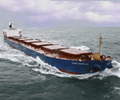
The ARA (Amsterdam-Rotterdam-Antwerp) bunker market — Europe's largest bunkering cluster and a key bellwether for maritime fuel transitions — is showing signs of divergence, with conventional fuel demand increasingly shifting toward Antwerp while Rotterdam consolidates its lead in alternative fuel volumes and fuel diversity.
Rotterdam Loses Conventional Bunker Volumes After RED III
Rotterdam's conventional bunker market has been under pressure since the Netherlands implemented the revised Renewable Energy Directive (RED III) earlier this year. The EU directive sets binding targets for renewable energy use across sectors, but the Netherlands moved ahead of other member states in transposing its bunker fuel obligations into national law. The port has trailed Antwerp in conventional bunker volumes for two consecutive quarters.
The Port of Rotterdam attributed part of the decline in conventional fuel sales to additional sustainability obligations imposed on fuel suppliers. The port authority stated that these measures have increased the cost of conventional bunker fuels relative to competing ports, prompting some shipowners to bunker elsewhere.
Rotterdam port association Deltalinqs, together with four other industry bodies, reinforced this argument in a position paper submitted to Dutch ministries on 20 July. The paper contends that differences in how the Netherlands has implemented RED III have created an uneven playing field and shifted conventional bunker demand to neighbouring ports.
"The Netherlands' early implementation of RED III was intended to accelerate the transition to greener fuels. In practice, however, the opposite is now happening: ships are simply bunkering 100% fossil fuels elsewhere," Deltalinqs said.
Rotterdam Pulls Ahead in Alternative Fuels
While Rotterdam appears to be losing conventional bunker volumes to Antwerp, it continues to record significantly higher sales of low- and zero-emission bunker fuels.
Rotterdam's biofuel blend sales more than doubled, rising from approximately 105,000 mt in the first quarter to about 240,000 mt in the second quarter of 2026. A market source partly attributed the increase to biofuel's improving economics against LSMGO amid higher fossil fuel prices during the Middle East war.
"The compression of bio-bunker premiums during the quarter, when biofuel premiums in relation to fossil marine fuel prices were shrinking, was also a supportive factor," Prima Markets analyst Ulrich Arnheiter said.
Growth extended beyond biofuels. Bio-methanol deliveries almost tripled to around 3,000 mt, up from about 1,000 mt in the first quarter. Rotterdam also recorded ethanol bunker sales for the first time in the second quarter, at approximately 1,000 mt. X-Press Feeders' Eco Levant took an ethanol-methanol blend in May, and Maersk's Laura Maersk followed with a larger barge delivery of 100% ethanol in June.
Only liquefied biomethane (LBM) volumes declined, with bunker sales falling to 3,000 mt from 7,000 mt in the previous quarter.
Antwerp Grows but Lags in Alternatives
Across the border, Antwerp's bio-bunker sales increased from around 21,000 mt to nearly 27,000 mt over the same period, but remained well below Rotterdam's volumes. No methanol sales were reported in the port, which does not break out LBM volumes separately.
Suppliers in both Rotterdam and Antwerp offer biofuels, LBM, and methanol. However, Rotterdam's position as one of the world's largest bunker ports and Europe's largest container port could make it a logical location to test emerging fuels, benefiting from a larger concentration of early-adopter shipowners, fuel suppliers, and demonstration projects than its neighbouring ports.
Commercial factors — including pricing, fuel availability, lead times, supplier offerings, and shipowner procurement strategies — are also likely to influence bunker purchasing decisions.
For instance, LSMGO-equivalent B100 can now be cheaper than LSMGO in Dutch ports once EU ETS — the emissions trading system that since 2024 requires ship operators to surrender allowances for a share of their CO2 emissions on EU routes — and FuelEU Maritime, the EU regulation targeting a graduated reduction in greenhouse gas intensity of marine fuels, are factored in, along with discounts from Dutch ZRE A tickets, Joe Tierney told ENGINE. Tierney is the head of trading at Verde Marine Energy.
The improved economics are driving a "huge increase in B100 demand and requirements," he said.
Will the Gap Persist?
Rotterdam's current lead does not necessarily mean the gap will persist. Equinor, for example, is due to begin supplying Wallenius Wilhelmsen with bio-methanol in Antwerp and Zeebrugge from late 2026 under a two-year agreement. As suppliers expand the availability of alternative fuels across the ARA region, differences in fuel availability and bunker sales between the region's major hubs could narrow over time. How the Netherlands adjusts its RED III implementation in response to industry feedback may also determine whether conventional volumes return to Rotterdam or the current split becomes a longer-term structural shift.
Other Developments This Week
Brazil's national energy agency has launched a public consultation on a draft resolution proposing to permit up to 100% biofuel (B100) for routine marine bunkering, according to law firm Mayer Brown. Current regulation limits the biodiesel content of marine diesel oil to a maximum of 0.5% by volume.
The European Commission has approved a €103 million ($117 million) Dutch State aid scheme to support the deployment of methanol- and hydrogen-powered vessels. The funding will support both newbuilds and retrofits across multiple vessel types, including passenger and cargo ships, primarily for short-sea shipping.
The American Bureau of Shipping has approved the design of a 12,000-cbm LNG bunkering articulated tug and barge (ATB) jointly developed by US shipbuilder Conrad Shipyard and South Korea's Samsung Heavy Industries.
Italian ferry operator Grandi Navi Veloci (GNV) is preparing five ferries for shore power connections, including two LNG dual-fuel vessels. The LNG dual-fuel ferry GNV Aurora completed a shore power trial at the Port of Barcelona, which confirmed the full functionality of the vessel's onboard shore power system, GNV said. The conventionally fuelled GNV Excellent has passed safety tests at the Port of Sète in France.
Source: ENGINE

