Antimony: The Critical Metal Behind Fire Safety, Defence and Energy Storage
Key Takeaways
- •China accounts for roughly 55% of global antimony production, with Russia and Tajikistan adding about 35%, concentrating nearly 90% of supply in three countries.
- •China's September 2024 export restrictions on antimony reportedly reduced exports by 97%, disrupting supply chains for dependent industries.
- •Flame retardants represent the largest single share of antimony consumption, with the metal also used in defence systems, glass production, and lead-acid batteries.
- •High-purity antimony trades at approximately $25,000–$30,000 per tonne after peaking near $60,000 in 2025, and demand is estimated to reach 660,000 tonnes by 2035.
- •Canadian projects including Antimony Resources' Bald Hill and Churchill Resources' Black Raven could help diversify supply, though permitting, financing, and execution risks remain.
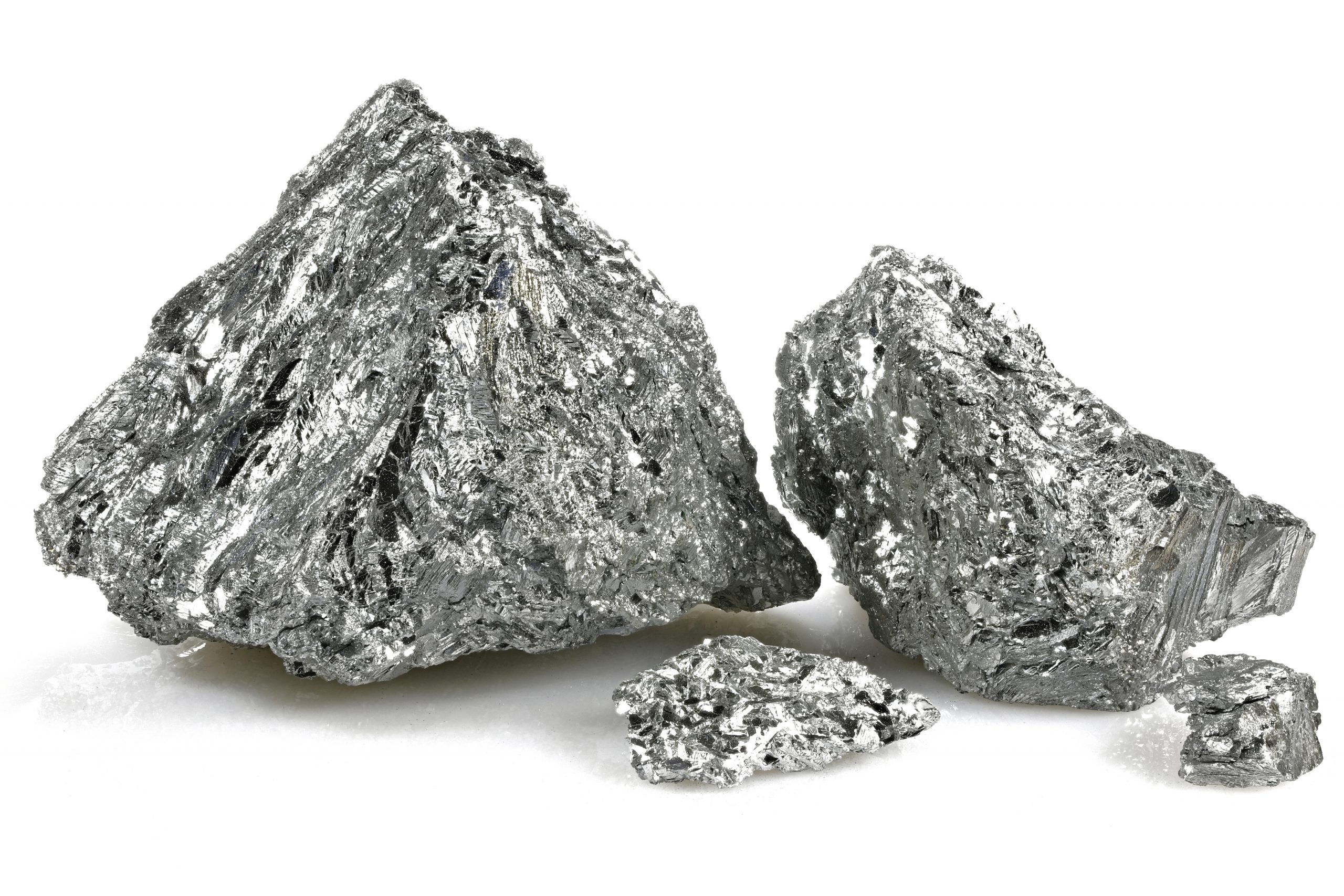
What makes antimony special?
Antimony is one of a small group of metals that have been in use for thousands of years. Ancient civilizations employed it in cosmetics such as kohl eyeliner and even as a treatment for parasites and skin conditions. One enduring legend tells of a 15th-century German monk who noticed pigs growing plumper after consuming antimony and decided to add it to his fellow monks' diet — an outcome reportedly fatal, and an early reminder that while antimony can be useful, it must be handled carefully. The monk in the story is identified as Basil Valentine.
Despite its toxicity when misused, antimony remains an important modern material. Today it is classified as a critical mineral by governments including the United States — which has listed antimony on its critical minerals list since 2018 — and the European Union, reflecting the wide range of industrial and technological applications it enables. Unlike copper or iron, antimony is not typically used for its bulk properties. Instead, it plays a supporting role, enhancing the performance of other materials.
Its most important function is in flame retardants, where it significantly improves fire resistance. Antimony compounds — particularly antimony trioxide — are used together with halogenated retardants to interrupt the chemical reactions that sustain combustion. During a fire, these compounds form molecules such as SbBr₃ and SbCl₃, which capture high-energy free radicals. This reduces heat generation and slows the spread of flames, making materials safer and more resistant to ignition. This "teamwork" effect allows manufacturers to achieve better fire resistance using less material, improving both performance and cost efficiency. As a result, antimony is an essential component in everything from construction materials to electronics. Flame retardants account for the largest single share of antimony consumption, which is why regulations governing fire-safety standards in building materials and electronics directly shape demand for the metal.
Demand drivers
Antimony's utility lies in the breadth of its applications. One of its more unusual physical properties is that it expands upon solidification, making it valuable in precision casting and manufacturing processes where dimensional accuracy is critical. When alloyed with metals such as lead or tin, antimony significantly improves hardness and durability — qualities that have long made it useful in industrial settings and defence applications, including the strengthening of ammunition and other military projectiles since the world wars. Even now, antimony remains strategically important in modern defence technologies, where it is used in infrared detection systems, night-vision equipment, and certain specialized explosives.
Beyond metallurgy, antimony plays an important role in glass manufacturing, where it helps eliminate microscopic bubbles and improve clarity — a critical requirement in the production of television screens. It is also widely used in lead-acid batteries for vehicles and backup power systems, with antimony enhancing their strength, durability, and charging performance.
Antimony could play a future role in emerging green energy technologies. It has shown promise as a material in liquid metal batteries, which offer a potentially low-cost and durable solution for large-scale energy storage. Such technologies could support the expansion of renewable energy, where managing fluctuations in supply remains a major challenge. There is also ongoing research into its use in solar cells, where it may improve efficiency and stability.
Despite these diverse uses, antimony has until recently operated outside public awareness, even as it increasingly appears in headlines tied to geopolitics and critical minerals. It is not as directly visible to consumers as gold or copper, nor is it a primary component in most consumer electronics. Instead, it tends to function in the background as a critical enabler of performance and safety across multiple industries.
Why antimony matters
Global antimony production is relatively modest, at about 120,000 tonnes annually. While that may sound substantial, it is small compared to bulk commodities — a single large cargo ship could theoretically carry nearly the entire annual supply. More importantly, demand is already estimated to exceed production, and that gap is projected to widen in the coming years.
One might assume this scarcity stems from geological rarity, and in antimony's case that is largely true. Antimony is a relatively rare element, found only in very low concentrations of about 0.2 gram per tonne in the Earth's crust. Its scarcity stems both from its limited natural abundance and from the difficulty of extracting it economically.
Antimony rarely forms concentrated, standalone deposits. Instead, it occurs in more than 100 different minerals, often in trace amounts, which makes large-scale, economically viable extraction challenging. The very name "antimony" is suggested to derive from the Greek words anti and monos, meaning "not alone," reflecting its tendency to occur alongside other elements.
Like many critical minerals, antimony is often produced as a by-product, particularly from gold and base metal mining operations. This creates a structural constraint: production decisions are frequently based on gold or base-metal prices, with antimony providing additional revenue. Even if demand for antimony rises, supply cannot easily be scaled unless those other mining activities increase as well.
This dynamic contributes to price volatility. High-purity antimony currently trades at approximately $25,000–$30,000 per tonne, after reaching highs of nearly $60,000 in 2025. These fluctuations reflect not only supply constraints but also the growing recognition of antimony's strategic importance.
Supply constraints
Beyond geological and economic challenges, antimony supply is highly concentrated geographically. China accounts for roughly 55% of global production, followed by Russia at about 23% and Tajikistan at around 12%. In total, close to 90% of global supply originates from a small group of countries that have faced heightened geopolitical tensions with Western nations.
That concentration has already translated into tangible supply risk. In September 2024, China implemented export restrictions on antimony, citing national security concerns. Reports indicate that exports fell by a dramatic 97% following the policy change, disrupting supply chains for industries dependent on the metal.
For investors, this dynamic is familiar. Similar patterns have emerged in markets such as rare earth elements and battery metals, where supply concentration creates both geopolitical leverage and pricing power. When production is limited, difficult to expand, and controlled by a small number of players, even minor disruptions can have significant knock-on effects.
Canada offers a potential avenue for diversification, though progress remains uncertain. The Beaver Brook mine in Newfoundland — currently the country's only primary antimony producer, owned by Chinese state miner China Minmetals — has been inactive despite strong demand. Meanwhile, there has been renewed activity at historical antimony projects in Canada. Antimony Resources' (CSE: ATMY; US-OTC: ATMYF) Bald Hill property in New Brunswick and Churchill Resources' (TSXV: CRI) Black Raven project in Newfoundland highlight growing interest in establishing domestic supply. If these projects advance successfully, they could become strategically important: in a market where total production is relatively small, even modest increases in output from stable jurisdictions could shift the balance of supply.
Another important factor is the size of the market itself. With annual production measured in the low hundreds of thousands of tonnes, antimony is not a large commodity market, meaning relatively small changes in supply or demand can have disproportionate effects on pricing. Current estimates suggest demand could reach 660,000 tonnes by 2035, while production may lag behind, leading to a persistent supply deficit. As a result, the global antimony market — currently valued at roughly $2.5 billion (C$3.5 billion) — could grow to $4.2 billion or more over the next decade.
Why should investors care?
Antimony's investment appeal lies less in its current market size and more in its strategic relevance. It is embedded across a range of critical domains — from fire safety and defence systems to energy storage — while also being caught up in the growing push for secure, domestic supply chains. At the same time, availability remains limited, shaped by challenging geology, byproduct dependence, and a high concentration of production in just a few regions.
This sets up a market dynamic where size becomes a defining feature. Because global antimony output is relatively limited, shifts that might seem minor in larger commodity markets can have a massive effect here. Increased demand or disruptions to supply can quickly tighten the market, creating conditions where price movements are more pronounced.
At the same time, translating that dynamic into investable outcomes is complex. Advancing new projects involves a range of hurdles, from permitting and financing to technical execution. Timelines can be long and uncertain, and outcomes are highly dependent on jurisdiction, infrastructure, and operator capability. As a result, while the upside can be compelling, it is closely tied to project-level risk and disciplined execution.
The broader theme is becoming hard to ignore: governments and industries are placing growing importance on securing reliable supply chains, particularly for materials tied to defence and energy systems. Within that shift, domestically sourced antimony could carry increasing strategic weight. Rather than being defined by scale, its significance comes from where it fits in the system. Antimony is unlikely to emerge as a high-volume commodity like copper or iron ore, but its value is tied to its function — improving the performance of other materials and supporting technologies that are difficult to substitute.
Like many of the most important materials, its role is not always immediately obvious. But as one unfortunate 15th-century lesson teaches, even small amounts of antimony can have powerful and sometimes life-changing effects.
This article was prepared by Liam Brennan, who holds an honours bachelor of science in chemistry and a master's in molecular science. The analyst at CEO.ca seeks to make complex commodity and technology topics accessible to investors. He can be reached at liam.brennan@earthlabs.com.
