Ripple Partners with Stripe-Owned Privy: Can the XRP Price Reclaim $2?
Wichtige Erkenntnisse
- •Ripple has partnered with Privy, a wallet infrastructure provider owned by Stripe, to offer embedded wallet services for developers building financial applications on the XRP Ledger.
- •The integration supports XRP, Ripple's RLUSD stablecoin, and other XRPL-based assets; users can access the wallets without manually managing private keys while retaining the option to export their credentials.
- •The partnership supports the x402 payment standard, enabling AI agents to transact with server-side wallets for digital services like data access and computing resources—an approach associated with agentic commerce.
- •According to figures cited by RippleX Senior Vice President Markus Infanger, the XRP Ledger has recorded more than eight million funded accounts and over $1 trillion in cumulative value transferred.
- •Whales accumulated more than 16.46 million XRP within five days while XRP traded near $1.16 on November 8; additionally, XRP ETFs recorded net outflows of approximately $529,500 between November 2 and 6.
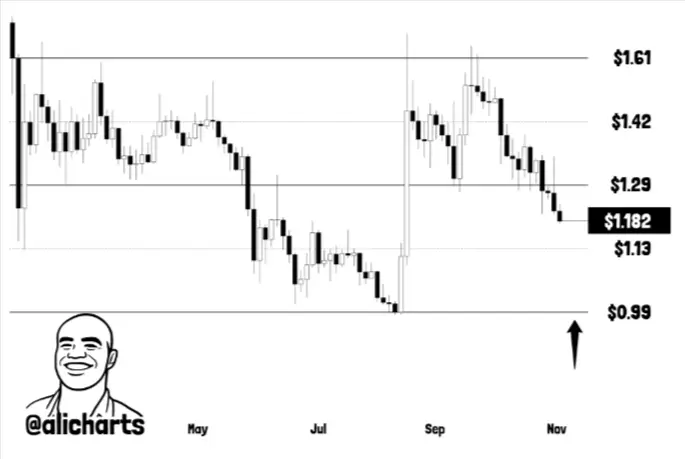
Ripple has partnered with Privy, a wallet infrastructure provider owned by payment company Stripe, to bring embedded wallets to the XRP Ledger (XRPL), expanding support for digital payments. With this arrangement, the ledger's developer tools come under the umbrella of one of the most well-known names in online payments—underscoring how conventional fintech infrastructure and public blockchain networks are growing closer together. This development comes at a time when accumulation by XRP whales is increasing despite continued selling pressure across the broader cryptocurrency market.
The integration, announced on October 13, allows developers building on the ledger to create wallets that support XRP, RLUSD, and other digital assets. Embedded wallets of this kind allow users to transact within an app through familiar login flows instead of managing separate keys or browser extensions, removing a long-standing hurdle for mainstream onchain onboarding. XRP traded near $1.16 on November 8, raising the question of whether the token can recover toward the $2 mark. Recent on-chain activity points to growing interest among major holders, though XRP has struggled to sustain upward momentum, with market analyst Ali Martinez reporting that whales accumulated more than 16.46 million XRP within five days.
Ripple and Privy Expand XRP Ledger Payment Infrastructure
Ripple's partnership with Privy introduces programmable wallet services designed for developers building financial applications on the XRP Ledger. The infrastructure allows businesses to create wallets, manage digital assets, and sign transactions without building and maintaining their own wallet systems. Wallet infrastructure has established itself as a distinct layer of the crypto stack, with specialized providers handling onboarding and key management so that app teams can focus on their core products.
According to Privy's official announcement, the integration supports XRP, Ripple's RLUSD stablecoin, and other XRPL-based assets. Users can access these services without manually managing private keys while retaining the option to export their credentials.
The partnership also supports automated payments via the x402 payment standard, enabling AI agents to execute transactions with server-side wallets. The standard builds on the long-unused HTTP status code '402 Payment Required' and links payments to ordinary web requests. These tools can support payments for digital services such as data access and computing resources—an approach associated with the emerging field of agentic commerce, in which autonomous software pays for the services it uses.
Markus Infanger, Senior Vice President at RippleX, said Privy's wallet infrastructure would help developers build payment applications on top of XRPL. The network has recorded more than eight million funded accounts and over $1 trillion in cumulative value transferred.
The integration follows other recent network developments, including a security update for the XRP Ledger concerning token permissions. Privy also plans to expand its services with transaction policy controls and network fee sponsorship, a mechanism that allows an app to cover network costs on behalf of its users. The companies have not disclosed the expected transaction volumes or anticipated XRP demand resulting from the partnership.
Can the XRP Price Reclaim $2 as Whales Accumulate?
XRP traded around $1.16 on November 8, according to market data, after falling from approximately $1.34 during the previous week. Despite the decline, holders of large wallets continued to accumulate tokens, based on Santiment figures shared by Martinez.
In a post from November 7 on X, Martinez reported that whales purchased more than 16.46 million XRP over the five-day period. However, the buying activity has so far not reversed the broader downward trend in the token's price. An earlier XRP price analysis identified $1.60 as an important resistance level.
Martinez also pointed to a potential inverse head-and-shoulders pattern, though the formation remains unconfirmed; such patterns are monitored by technical traders as possible reversal signals and generally require confirmation before being considered actionable. A sustained recovery above $1.60 would bring higher resistance levels into focus, including the psychological $2 mark. From the current level of $1.16, XRP would need to gain approximately 72.4% to reach that target.
XRP/USD 3-day chart (Source: X)
Meanwhile, a recent XRP market analysis identified support for the token between $1.04 and $1.16. The same report recorded approximately $529,500 in net outflows from XRP ETFs between November 2 and 6, meaning withdrawals from XRP exchange-traded funds exceeded new inflows during that period. Weak ETF demand presents another hurdle for buyers trying to reverse the token's decline, though whale accumulation suggests some large holders continue to add to their positions at lower prices.
Institutional investment products remain part of the broader XRP market landscape, with asset manager GraniteShares postponing the launch of its leveraged XRP ETFs until November 30—a date now serving as a near-term indicator of institutional appetite for XRP exposure.
Martinez has separately identified $0.99 as the next potential support zone following XRP's break below the midline of its trading channel. A further decline toward that level would increase pressure on buyers trying to defend the $1 mark.

