Diaspora-Musikerin Janice Jo Lee bringt „Ancestor Songs“ nach Korea
Wichtige Erkenntnisse
- •Janice Jo Lee musste nach dem südkoreanischen Staatsangehörigkeitsgesetz ihren Anspruch auf die koreanische Staatsbürgerschaft aufgeben, um ein Arbeitsvisum zu erhalten; das langwierige Verfahren zwang sie zur Absage einer früheren Tournee.
- •Die damalige künstlerische Leiterin des Jeonju International Sori Festival, Kim Hee-sun, lud Lee und ihre Band nach einem Auftritt in Ottawa nach Korea ein und sagte, ihre Musik klinge koreanischer, als Lee selbst erkannt habe.
- •Lees künstlerische Identität wurde maßgeblich durch das Erlernen der Janggu 2018 und durch die Entdeckung von Pansori geprägt, die sie als transformativ für ihr Komponieren und Singen beschreibt.
- •Die QTs, deren Name für queer/trans cuties steht, sind ein multikulturelles Ensemble; ein Teil der Einnahmen ihres Seoul-Auftritts im Uplift geht an die Beyond The Rainbow Foundation.
- •Die Korea-Tour beginnt am Freitag in Busan im HQ Bar, führt mit zwei aufeinanderfolgenden Abenden in Seoul fort und endet am 13. August beim Jeonju International Sori Festival.
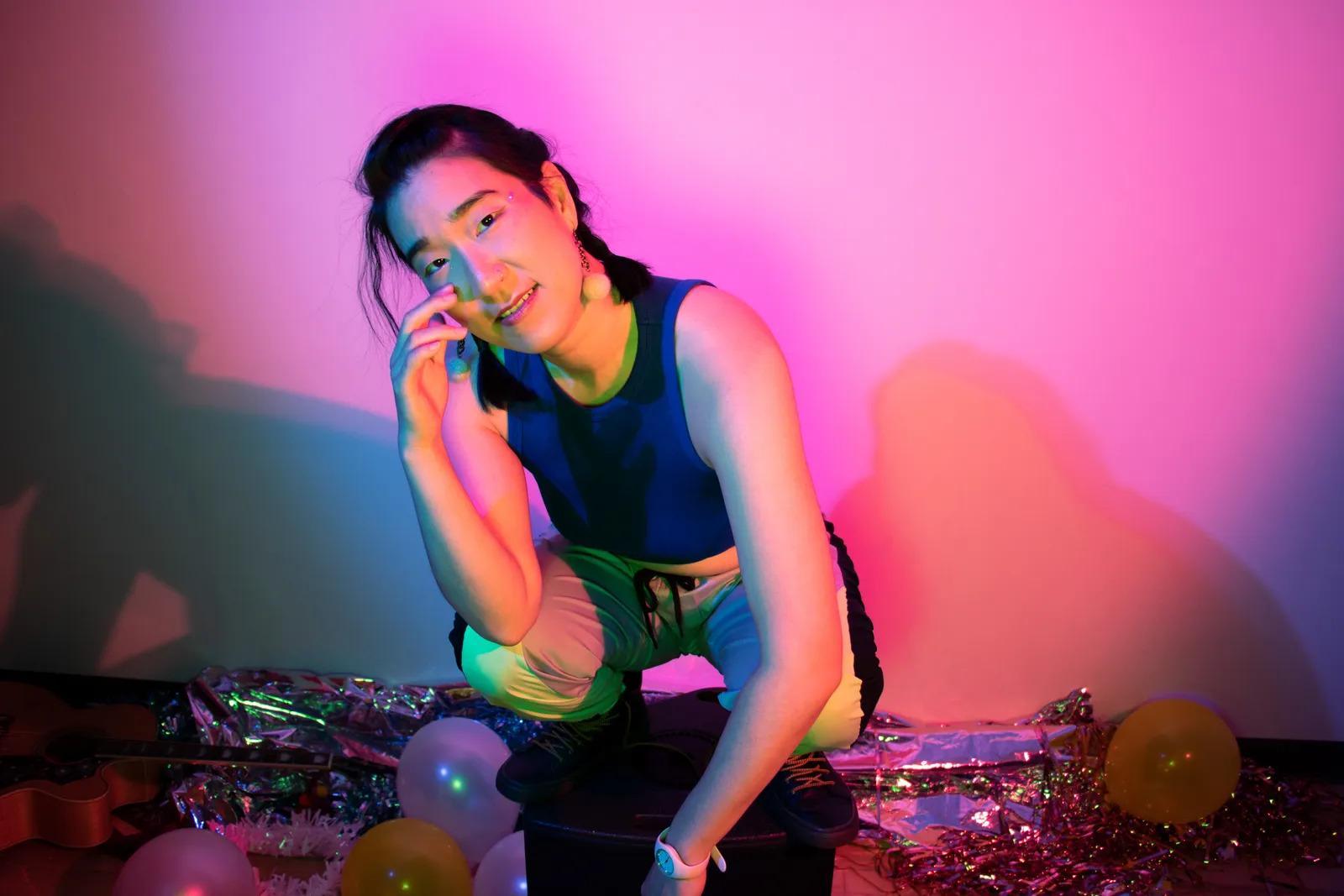
Um im Land ihrer Vorfahren aufzutreten, musste die koreanisch-kanadische Folk-Musikerin Janice Jo Lee zunächst einen Teil ihrer Identität aufgeben: ihren Anspruch auf die koreanische Staatsbürgerschaft.
"Because at the time of my birth in Canada, my parents both held Korean citizenship, I held a claim to Korean citizenship," Lee said. "For the year of my birth, Korea does not allow me to hold dual citizenship. So Korea required me to renounce my claim to Korean citizenship, and apply for a work visa solely as a Canadian. It was a bureaucratic nightmare."
Südkoreas Staatsangehörigkeitsgesetz verbietet Erwachsenen in der Regel die doppelte Staatsbürgerschaft; nur enge Ausnahmen gelten, die die meisten im Ausland geborenen Nachkommen koreanischer Staatsangehöriger nicht erfassen — eine Regelung, die für koreanische Diaspora-Künstler und -Berufstätige, die im Land arbeiten wollen, Hürden geschaffen hat.
Das Staatsbürgerschaftsproblem zwang Lee, eine frühere Tournee mit ihrer in Toronto ansässigen Folk-Fusion-Band Janice Jo Lee and the QTs abzusagen. "We had to cancel our tour last year because of how long the process ended up taking," she said. "My bandmates who are Canadian without Korean heritage, it was easier for them to get a work visa than me."
Die Ironie wird noch größer durch die Umstände, die Lee überhaupt zur Planung einer Korea-Tour veranlassten. Kim Hee-sun, damals künstlerische Leiterin des Jeonju International Sori Festival — einem der bekanntesten World-Music-Festivals Koreas, gegründet 2001 und vom International Music Council der UNESCO anerkannt — sah die QTs in Ottawa auftreten und lud sie nach Korea ein.
"She came backstage and told me the way I sing about my grandmother, the deep melancholy in the melodies — my music was more Korean than I understood," Lee recalled. "That was a huge validating moment for me."
Wurzeln in der Diaspora
Lees väterliche Familie stammt von der Insel Ulleung in der Provinz Nord-Gyeongsang, während die Familie ihrer Mutter aus Mokpo in der Provinz Süd-Jeolla kommt. Als sie in Toronto aufwuchs, sprach sie zu Hause Koreanisch, besuchte eine koreanische Kirche und praktizierte Traditionen wie "jesa" (Ahnenriten) und Feiern zum Lunar New Year. Außerdem lernte sie schon früh koreanische traditionelle Musik, oder gugak, und Tanz.
"For children of diaspora in Canada, a 'gyopo' like me, when we grow up here we are made to feel like we are not Canadian enough because we are not white. There is a sense of being an outsider, and we are often reaching for the homeland," she said.
"It's ironic because it was the racism I experienced my whole life that pushed me back to explore my roots. As a folk musician in Canada, I've showcased at many major Canada-U.S. folk events, but festival directors don't know what to do with me, a Korean woman with a guitar."
Nachdem sie vor rund zehn Jahren erlebt hatte, was sie als "my life's greatest spiritual destruction/burnout" bezeichnete, verbrachte Lee die folgenden Jahre damit, ihre Beziehung zur Musik neu aufzubauen.
"My personal and artistic journey for the past 10 years has been about reconnecting with my roots," she said. "My whole body of work as an artist explores my Korean heritage, my lineage and what I call my 'Ancestor Songs' — the music and voice I inherited through my family."
Janggu und Pansori entdecken
Lees Musik ist dramatisch und erdverbunden und verbindet Folk-Erzähltraditionen mit Blues und Elementen traditioneller koreanischer Musik. 2018 sagte sie ihrem Vater, dass sie lernen wolle, die Janggu zu spielen, eine traditionelle koreanische Sanduhrtrommel. Kurz darauf traf er in einem koreanischen Lebensmittelladen auf eine Janggu-Lehrerin. Er rief seine Tochter an und gab ihr das Telefon; bald darauf begann sie mit Privatunterricht.
"Learning janggu changed my musical life. Gugak rhythms felt so different in my body. Compared to Western classical music, Korean rhythms are syncopated, less square, lilting — you have to feel them in your body rather than count them in your head," she said. "I tried composing songs to janggu rhythms and it was impossible at first to sing to these rhythms. I had never done it before. So that process became a literal decolonizing of my body of Western classical, to teach my body how to feel Korean rhythms. And when I figured it out, it felt aligned. You can hear it in my song 'Years of Secret Melody.'"
Pansori, die koreanische Tradition des musikalischen Erzählens — die UNESCO 2003 als Meisterwerk des mündlichen und immateriellen Erbes der Menschheit auszeichnete — war ein weiterer tiefgreifender Einfluss.
"Hearing pansori for the first time was earth-shaking," she said. "I was like 'What is this magic?'"
Diese Erfahrung inspirierte sie zum Song "Swim Forever", dessen Text ihre Mutter Young Hee Kim, eine Dichterin, ins Koreanische übersetzte. "Without having pansori training, that song is me reaching for pansori," Lee said.
Politik, Wirtschaft und die Band
Lee spricht offen über die politischen Dimensionen ihres Songwritings. "I try to apply principles of human rights and self-determination to how I run my band, and in my lyrics," she said. "I write a lot about the Earth, and how capitalism and industry destroy the Earth and our souls. My new song 'Fire Fire' is about the grief and destruction of fire around the world. I find myself wailing for the Earth, the forests, the oceans."
Als Bandleaderin sieht sich Lee als Inhaberin eines kleinen Unternehmens und spricht offen über den wirtschaftlichen Druck, dem Berufsmusiker ausgesetzt sind.
"Big Tech has taken away our main product — the recording — and social media has made us give away our other product — performances," she said. "Because we have to put all our music online for free now, the last remaining product is the concert. It's tough to break even but I am committed to fair working conditions for my bandmates, my workers."
Zu den Bandmitgliedern gehören Camilo Consuelo Esperanza an Gesang und Keyboard, Nim Agalawatte am Bass und Vania Lee am Schlagzeug. Gemeinsam bilden sie ein multikulturelles Ensemble mit Verbindungen zu China, Sri Lanka, Mexiko und Katalonien.
Der Name der Band klingt zwar wie "cuties", trägt aber eine tiefere Bedeutung: "QTs stands for queer/trans cuties," erklärte sie. "Asians are often called cute, and I used to resent that, because I felt it was infantilizing. But now I have embraced it more, because I think cute means delightful and full of light, which I am. And I also have no problem fighting with anyone who disrespects me. You can be cute and ferocious."
Dass die Band keiner Belästigung ausgesetzt sein möge, spiegelt das breitere Umfeld für LGBTQ+-Künstler in Südkorea wider, wo queere Acts sich in der unabhängigen Musikszene Seouls Raum geschaffen haben, auch wenn der rechtliche Schutz vor Diskriminierung begrenzt bleibt.
Korea-Tourplan
Janice Jo Lee and the QTs eröffnen ihre Korea-Tour am Freitag im HQ Bar in Busan; Nereidas eröffnet den Abend. Danach geht es für zwei aufeinanderfolgende Abende nach Seoul. Am Samstag treten sie bei Uplift zusammen mit Hurricane Kimchi, Kontrajelly und Rhino Rainbow auf; ein Teil der Einnahmen geht an die Beyond The Rainbow Foundation. Am Sonntag stehen sie im Seendosi in der Innenstadt von Seoul mit Haepa und Howaho auf der Bühne.
Am 13. Aug. treten Lee und die Band beim Jeonju International Sori Festival in Jeonju, Provinz Nord-Jeolla, auf.
Es ist erst Lees dritter Besuch in Korea.
"I hope that people connect with my music," Lee said of her expectations. "I want my aunt to come to my concert. Most of my family hasn't heard me play music live. I'm excited to take my best friend and bandmate Camilo to Ulleung Island and swim in the ocean. I hope I sell some CDs. I hope we don't get harassed for being queer trans. I hope people are willing to take a chance and come to our concerts. I hope my Korean speaking is OK, or at least comes off cute that I'm trying."
Weitere Informationen finden sich unter janicejolee.ca.

