川普的「復仇巡演」正在把聯邦權力變成報復工具,NYT 的 Bouie 警告
重點速覽
- •《紐約時報》專欄作家 Jamelle Bouie 認為,Trump 第二任期的復仇行動正在把聯邦政府變成懲罰政治對手與任何讓他難堪或反抗他的人的工具。
- •Kilmar Abrego Garcia 在違反法院挑戰與法官明確指示下被遣送至薩爾瓦多的監獄,之後贏得最高法院一致裁定要求政府協助其返美,但司法部如今正試圖重啟對他的刑事案件。
- •David Hearn 因林肯反思池的相關指控面臨最高 10 年刑期的重罪指控,但在證據顯示他並未造成任何損害後,司法部撤銷了指控。
- •Bouie 指出 Trump 鎖定的對象包括 Mark Milley、John Bolton、Mike Pompeo、Mark Esper 等前官員,以及公務員、檢察官、法官、支持彈劾他的共和黨人和 2020 年拒絕他的選民。
- •Bouie 將 Trump 與 Nixon、Hoover 濫權行為相比,但認為 Trump 並不掩飾其動機,並警告若他覺得自己陷入親手造成的困局,可能會採取破壞性行動來維持脆弱的自我形象。
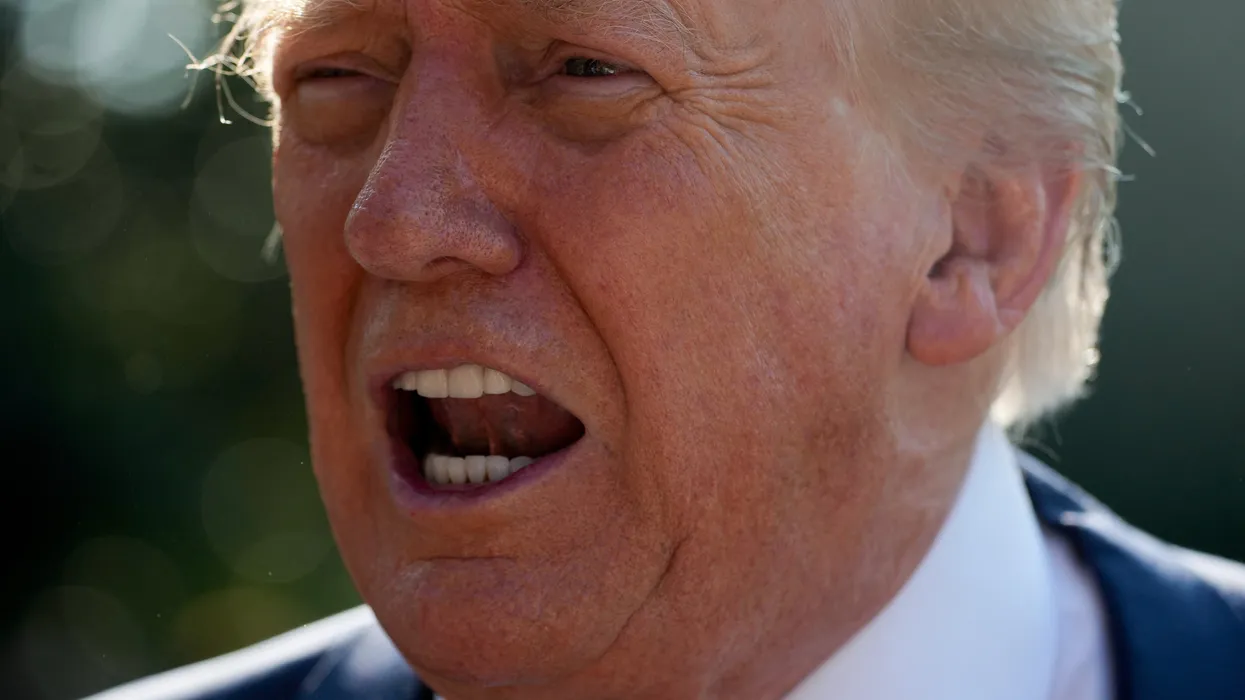
President Donald Trump's second-term revenge campaign is no longer confined to angry posts and political grudges, critics warn. In this view, the president has moved beyond his political adversaries and is increasingly deploying the vast power of the federal government against anyone who resists, embarrasses, or simply defies him — a pattern that raises broader questions about how far executive power can be pushed when personal grievance becomes a governing impulse.
New York Times columnist Jamelle Bouie argued in a blistering Wednesday column that Trump's ongoing drive for revenge against his political foes is warping the federal government into an instrument for settling scores.
Bouie pointed to former officials whom Trump continues to regard as disloyal, including Gen. Mark Milley, John Bolton, Mike Pompeo, and Mark Esper. The president's targets extend well beyond former aides, Bouie wrote, reaching civil servants, prosecutors, judges, Republicans who supported his impeachment, and even voters who rejected him in 2020. The result, in his telling, is a White House driven less by a public agenda than by the president's desire to punish those who defy or embarrass him.
Bouie singled out two cases as the clearest examples: the Kilmar Abrego Garcia case and the prosecution of David Hearn.
Garcia was deported to the brutal prison in El Salvador despite open legal challenges and against a judge's explicit instruction to turn the planes around. Bouie wrote that when Garcia fought his removal and won a unanimous Supreme Court ruling requiring the government to facilitate his return, he became a symbol of resistance. The administration's criminal case against him, Bouie argued, looked less like ordinary law enforcement than retaliation for successfully challenging Trump's deportation program. A judge dismissed the case, but the Justice Department is now trying to revive it.
"The Ahab-like tenacity of the White House in its pursuit of Abrego Garcia might make sense if he were some criminal mastermind — a danger to the public order. He wasn't," Bouie wrote. "He was just an ordinary person, a working member of his community who happened to be an easy target for the president's deportation machine."
The administration, Bouie contended, wanted to make an example of Garcia to other immigrants, warning them to leave the country or suffer. Garcia's victory not only threatened Trump's program; it also became a symbol of defiance.
"This is why the Trump administration wouldn't let up," Bouie wrote. "Trump tried to crush Abrego Garcia, and when he couldn't, he made it the priority of his government to punish him for his resistance. This was less policymaking than obsession."
The second case involves Hearn, who was cycling in bicycle shorts and a jersey when he stopped by the Abraham Lincoln Reflecting Pool to see the "botched" paint job and dipped his hand in to feel what the new surface was like. Trump's administration responded by charging him with a felony that could land him in jail for as much as 10 years.
"Unable to take responsibility for his own mistakes and failures, Trump blamed unnamed saboteurs and appears to have ordered the Department of Justice to press charges against them," Bouie wrote, recalling that Hearn stood accused of pulling off a piece of the pool's liner with both hands after cutting it with a box knife.
Hearn's lawyer, Norm Eisen, has said publicly that the Olympian became a "scapegoat" for Trump's failure and public humiliation. Once evidence emerged showing that Hearn was not responsible for any of the damage, the Justice Department was forced to drop the charges.
Bouie noted that Trump is hardly the first president to weaponize the government against political foes. Richard Nixon used the IRS and the FBI against his enemies. J. Edgar Hoover, the former FBI director, was obsessed with the Rev. Dr. Martin Luther King Jr., having him wiretapped and attempting to break up his marriage by sending his wife accusations.
"Both Nixon and Hoover cloaked their abuses of power in the language of necessity and national interest," Bouie wrote. "They paid lip service to the rules and norms of constitutional government even as they treated them as obstacles to their own power. Committed to vice, they nonetheless feigned tribute to virtue."
Trump isn't doing any of that, Bouie argued. The president does not see himself as the head of one of the three branches of government; he views himself "as the government." Trump's goal, Bouie wrote, is "glorification" and a "desperate" attempt to save face.
What worries Bouie most, however, is what happens if Trump finds himself stuck. With Iran, for example, Trump ripped up a nuclear agreement, went to war, and ultimately caused larger problems not only for the U.S. but for the world.
The fear, Bouie wrote, is that if Trump realizes he is "caught in a trap of his own making," he will "try to wreck the world" in an effort "to save his fragile sense of self."

