Democraten richten zich op Trumps budgetchef Russell Vought in strijd om de bevoegdheid over de schatkist
Belangrijkste punten
- •OMB-directeur Russell Vought, de architect van Project 2025, kan zijn positie bedreigd zien worden nu Democraten van plan zijn zijn omgang met door het Congres toegewezen fondsen uit te dagen.
- •Democraten kunnen de macht van het Congres over de schatkist uit Artikel I herstellen door nauwkeurigere begrotingswetten te schrijven die de presidentiële discretie beperken, zoals het verplicht stellen van toegang tot Stafford Act-rampenfinanciering voor elke door storm getroffen staat.
- •Dwangbeheer van toegewezen fondsen is sterk beperkt sinds de Congressional Budget and Impoundment Control Act van 1974, die het Congres aannam nadat president Nixon weigerde goedgekeurd geld uit te geven.
- •Econoom Robert J. Shapiro schrijft een meerderheid van de schuld van 40 biljoen dollar toe aan Trumps belastingwijzigingen en verhoogde defensie-uitgaven, en noemt naoorlogse tekorten van zes tot zeven procent van het bbp ongeëvenaard.
- •De financiering van de schuld absorbeert besparingen en verhoogt hypotheek- en creditcardkosten, druk die volgens Shapiro heeft bijgedragen aan het afkeren van de kiezers van de Republikeinen bij de tussentijdse verkiezingen op dinsdag.
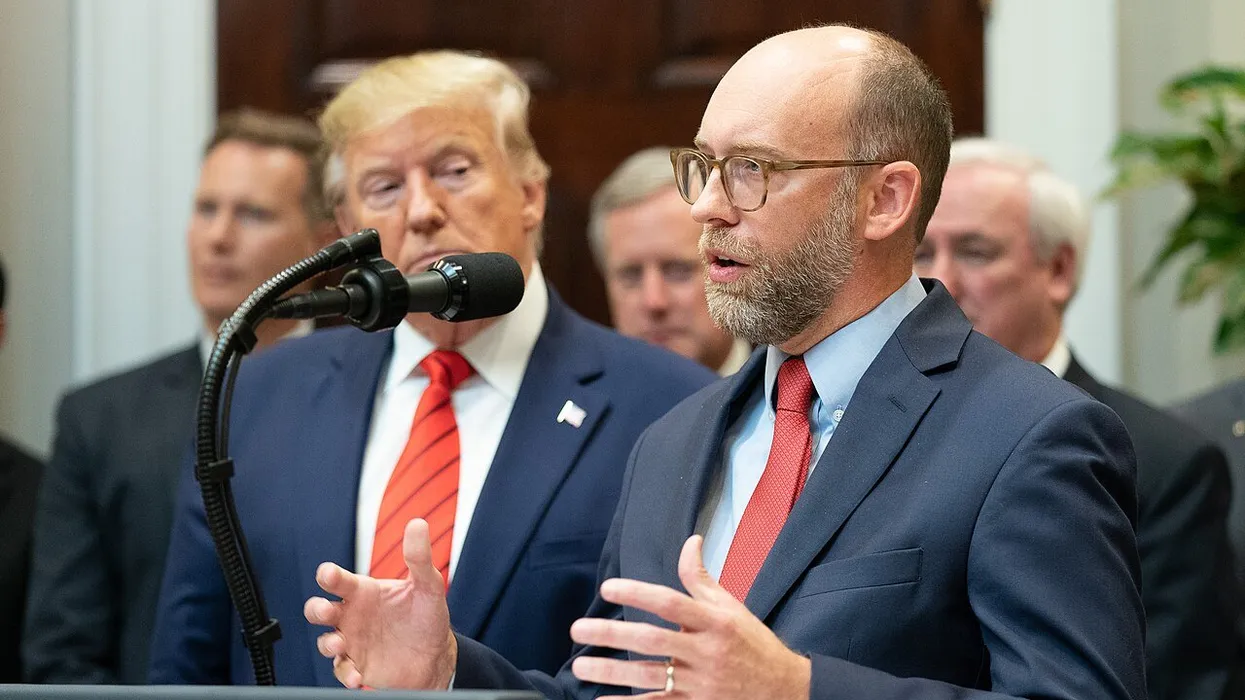
Russell Vought, de directeur van het Office of Management and Budget van president Donald Trump en de architect van zijn Project 2025-agenda, behoort sinds het begin van de tweede termijn van de Republikein tot de machtigste figuren in Washington. Het OMB stelt het budgetvoorstel van de president op en houdt toezicht op de manier waarop uitvoerende instanties het geld uitgeven dat het Congres toewijst, waardoor de directeur ervan centraal staat in elke strijd over de federale uitgaven. Volgens een nieuw rapport dreigt Voughts functie echter mogelijk binnenkort in gevaar te komen.
"Congressional Democrats obviously have lots of things on their to-do list for next year, starting with cost-of-living issues and cracking down on corruption", schreef Catherine Rampell van The Bulwark donderdag. "But there's another key priority that has gotten less attention but is no less important: restoring the constitutional separation of powers so that Congress actually controls the power of the purse again." De macht over de schatkist is de constitutionele bevoegdheid van het Congres, geworteld in Artikel I, over de manier waarop federaal geld wordt ingezameld en uitgegeven — de bevoegdheid die Rampell volgens haar betoog terug moet naar het Congres.
Ze voegde toe: "Or to put it in more colorful terms: Congress is about to reclaim its cojones, and then go after the low-profile cabinet member who sliced them off in the first place."
Na het uiteenzetten van de details van hoe Vought het Congres heeft gefrustreerd en zich naar verluidt illegaal heeft gedragen, voegde Rampell toe: "Once back in the majority, Democratic lawmakers have some tools at their disposal to reclaim the power of the purse. Or at the very least, make it harder for Trump and Vought to keep violating the Constitution."
Ze vervolgde: "A lot of the tools involve more careful writing of appropriations bills, and taking away any plausible claim Trump has for exercising discretion in spending decisions. For example, lawmakers could be more specific in how they lay out the criteria for awards, so Trump has no effective way to favor friends and disfavor perceived enemies (e.g., by specifying that any state that has had landfall of a storm blowing with hurricane-force winds must be treated as eligible for Stafford Act funding, thereby preventing Trump from withholding those funds from blue states). Congress could also make it easier for private parties to bring a lawsuit when funding gets illegally frozen." De Stafford Act waarnaar zij verwijst, is de federale wet die financiering voor rampenbestrijding mogelijk maakt.
Rampell voegde toe: "That'll help prevent future illegal impoundments. But what about damage already done? Democrats could start by subpoenaing documentation of all the ways Vought has helped the administration break the law." Dwangbeheer — het inhouden van geld dat het Congres al heeft toegewezen — is sinds de Congressional Budget and Impoundment Control Act van 1974 sterk beperkt, een wet die het Congres aannam nadat president Richard Nixon weigerde goedgekeurde fondsen uit te geven; volgens die wet kunnen presidenten uitgaven niet permanent annuleren zonder instemming van het Congres.
De fiscale staat van dienst van de regering is apart onder de loep genomen. In augustus vertelde econoom dr. Robert J. Shapiro — die president Bill Clinton adviseerde tijdens zijn evenwichtige begrotingen en vier overschotten — aan AlterNet dat het huidige tekort van 40 biljoen dollar grotendeels Trumps schuld is.
"Deficits equal to six or seven percent of GDP, which is unprecedented in the postwar era", vertelde Shapiro destijds aan AlterNet. "It's a real outlier. And that's driven entirely by his tax changes, which carry enormous budgetary costs, plus a wholesale, large-scale increase in defense spending. So how much of this is Trump? A majority of it — not all of it, but a majority."
Donderdag vertelde Shapiro aan AlterNet dat de tekorten ook de economische problemen van gewone Amerikanen hebben verergerd — dezelfde druk die een grote rol speelde bij het afkeren van de kiezers van de Republikeinen tijdens de tussentijdse verkiezingen op dinsdag.
"The debt does have effects that have exacerbated the economic squeeze on people", vertelde Shapiro aan AlterNet. "Most clearly, financing the debt absorbs so much available savings that other forms of credit, like mortgages and credit card debt, become more expensive. It's supply and demand. There's less savings left over, because when you have a $40 trillion debt, it's not simply that you have to finance an additional $2 trillion each year, because that's the annual deficit now: $2 trillion. In addition, $10 trillion each year comes up for refinancing. That is, the Treasury securities mature, and so you have to float new Treasury securities to refinance the debt that has now matured. You buy a 10-year bond, or you buy a five-year note. Five years later, it matures. You've got to pay it off, and in order to pay it off, you've got to borrow the money."
Geen van de tegenmaatregelen die Rampell schetst is automatisch: het opstellen van begrotingswetten en het uitvaardigen van dagvaardingen zijn meerderheidsbevoegdheden, dus hoeveel van haar programma werkelijkheid wordt, hangt af van wat de Democraten daadwerkelijk controleren wanneer het nieuwe Congres in januari bijeenkomt.

