景気循環指標:実質消費は横ばい
重要ポイント
- •名目消費は7月に前月比0.2%増となり、Bloombergのコンセンサス予想0.1%増を上回った。
- •移転所得を除く実質個人所得は、所得の増加にもかかわらず最近のピークを下回ったままだった。
- •耐久財消費は減少し、ガソリンスタンドを除く実質小売売上高は比較的横ばいだった。
- •人口調整が変わらない中でも、家計雇用の指標は引き続き下向きのトレンドを示した。
- •データは、支出面の指標の方が家計労働市場の指標よりも底堅い、ばらついた景気循環シグナルを示している。
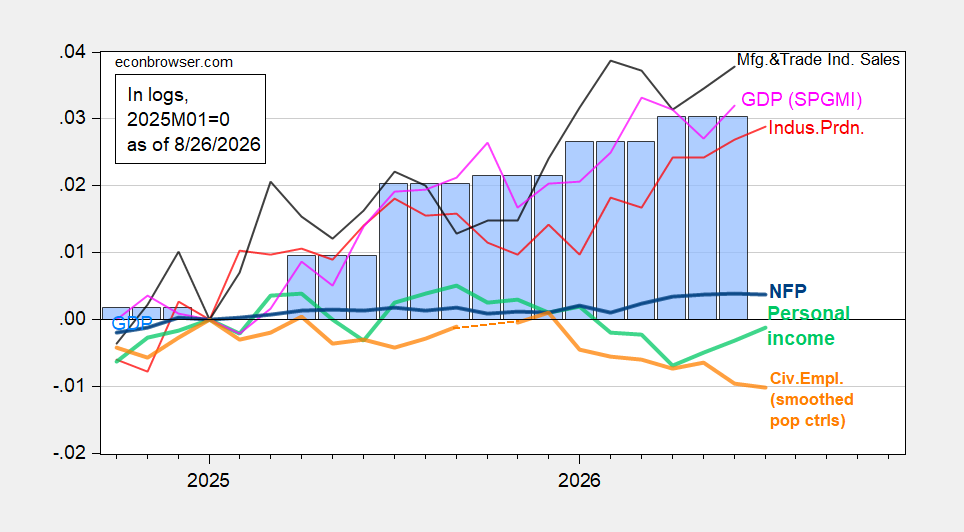
名目消費は前月比0.2%増と、Bloombergのコンセンサス予想0.1%増を上回ったが、移転所得を除く実質個人所得は依然として最近のピークを下回っている。この組み合わせが重要なのは、消費が家計需要をみる主要な月次指標である一方、所得と雇用は、通常その需要を時間をかけて支える所得面の要因だからである。
Figure 1: NFP employment (bold blue), civilian employment with smoothed population controls (bold orange), industrial production (red), personal income excluding current transfers in Ch.2017$ (bold light green), manufacturing and trade sales in Ch.2017$ (black), and monthly GDP in Ch.2017$ (pink), GDP (blue bars), GDPNow nowcast of 7/10 (light blue box), all log normalized to 2025M01=0. Source: BLS via FRED, BLS, Federal Reserve, BEA 2026Q2 2nd release, S&P Global Market Insights (nee Macroeconomic Advisers, IHS Markit) (8/3/2026 release), and author’s calculations.
Figure 2: Civilian employment adjusted to NFP concept smoothed population controls, using experimental controls for 2025 (bold orange), manufacturing production (red), ADP private nonfarm payroll employment (light green), real retail sales, CPI deflated (black), freight services indexes (brown), and coincident index in Ch.2017$ (pink), GDO (blue bars), all log normalized to 2025M01=0. Source: BLS, ADP via FRED, Philadelphia Fed, Bureau of Transportation Statistics, Federal Reserve via FRED, BEA 2026Q2 2nd release, and author’s calculations.
7月の消費が横ばいだったことは、移転所得を除く個人所得が増加している中では注目に値する。S&P 500も、おそらく偶然ではないが、同様に横ばいだった。以下では、消費、耐久財消費、そしてガソリンスタンドを除く実質小売売上高を詳しく比較する。
Figure 3: Consumption (bold black), durable consumption (blue), retail sales ex gasoline stations deflated using core CPI (red), all in real terms, in logs 2025M01=0. Source: BEA, Census, BLS and author’s calculations.
耐久財消費の低下は、特定の関税関連の問題というよりも、家計資産に関する先行きを見据えた行動を反映している可能性があるが、はっきりしない。
私にとって、グラフで最も興味深いのは、人口調整が変わっていない時期においても、家計ベースの雇用指標が引き続き下向きのトレンドを示している点である。

