PUMP sale del 154% in un mese mentre i buyback di Pump.fun bruciano oltre il 16% dell’offerta; la prevendita di LiquidChain si avvicina a $1 milione
Punti chiave
- •PUMP è salito del 154.49% negli ultimi 30 days fino a scambiare a $0.004829, con ricavi annualizzati del protocollo sopra $400 million.
- •Pump.fun ha speso $440 million in buyback e burn, eliminando in modo permanente 162.44 billion PUMP, oltre il 16% dell’offerta originale.
- •Il 26 August Pump.fun ha aggiunto il trading completo HyperEVM alla sua app mobile, consentendo agli utenti di negoziare token dall’ambiente smart contract di Hyperliquid contro USDC.
- •La prevendita di LiquidChain ha raccolto $952,000, con LIQUID prezzato a $0.0149 e staking in prevendita al 1,190% APY mentre il progetto si avvicina al primo traguardo di $1 million.
- •LiquidChain, una Layer 3 basata su un motore di esecuzione SVM, afferma che gli asset di Bitcoin, Ethereum e Solana possono essere rappresentati senza wrapped token convenzionali, e ha superato review di sicurezza di SpyWolf e CertiK.
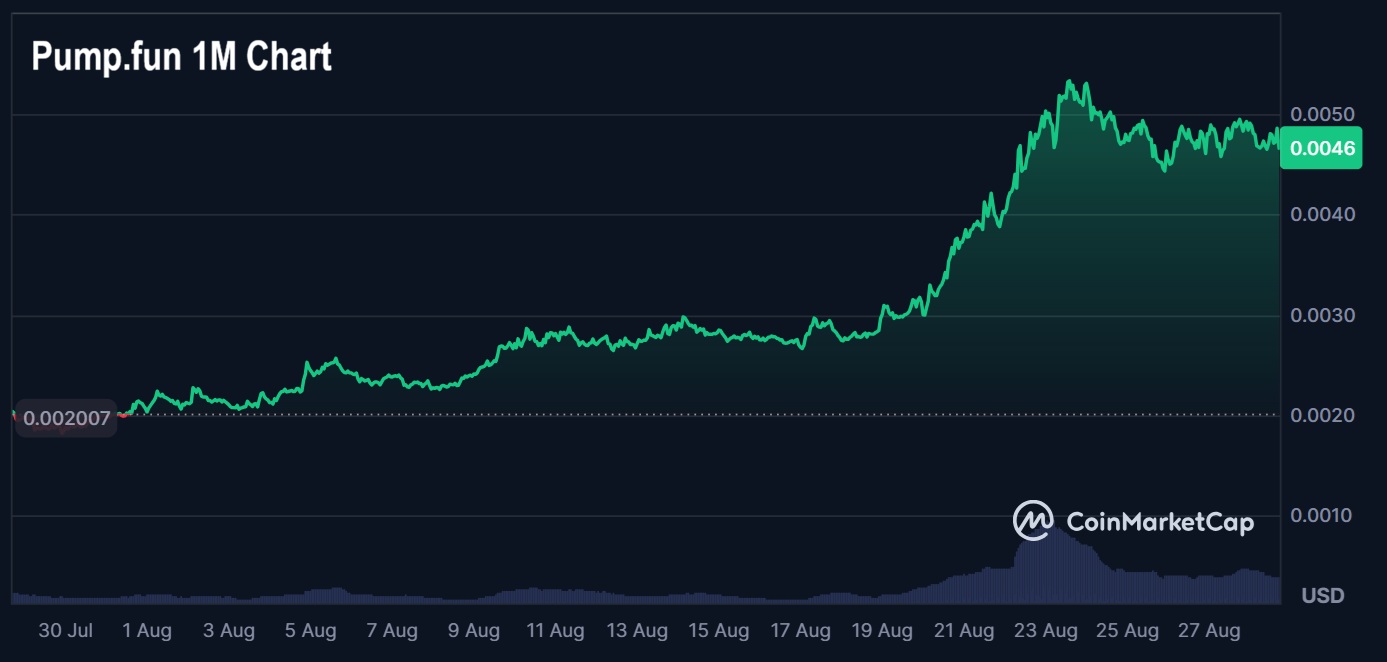
Pump.fun has staged one of the more dramatic crypto recoveries of the past month, with PUMP now trading at $0.004829 after gaining 154.49% in 30 days. The token has more than doubled as traders reassess the economics behind one of crypto’s most heavily used token-launch platforms.
There is more behind that move than momentum. Pump.fun now directs roughly half of its eligible platform revenue toward buying PUMP on the open market and burning it. The platform’s official dashboard shows $440 million spent on buybacks and burns, removing 162.44 billion PUMP, or more than 16% of the original supply. Annualized protocol revenue currently stands above $400 million.
Pump.fun is also becoming less dependent on the ecosystem where it started. On August 26, it added full HyperEVM trading to its mobile app, allowing users to trade tokens from Hyperliquid’s smart contract environment against USDC. The Solana-born launchpad is becoming more flexible across chains.
That expansion shows the way for LiquidChain (LIQUID). Rather than expanding an application chain by chain after it finds an audience, LiquidChain is building infrastructure that lets applications reach Bitcoin, Ethereum, and Solana from the word go.
Its presale has now raised $952,000, with LIQUID priced at $0.0149 as the project approaches its first $1 million milestone.
PUMP’s Rally Shows What Happens When a Crypto Product Finds Its Market
Pump.fun’s 154% month is tied to something relatively unusual in the token market: a direct relationship between activity on a successful crypto product and demand for its token.
The platform’s buyback system means stronger activity generates more revenue, part of which is then used to purchase PUMP. Those tokens are burned rather than returned to circulation.
Recent activity has made that loop particularly visible. Pump.fun recorded its strongest daily revenue in almost a year on August 25, with market analysis pointing to the resulting buybacks as a major contributor to PUMP’s latest strength.
Pump.fun found product-market fit around Solana meme coins. Once it had the users, the logical next move was to reach more markets — a familiar problem for successful crypto applications. As products scale, the question is often no longer whether they work, but how quickly they can operate beyond the chain or niche that first brought them attention. Ecosystems do not want to get trapped into a single lane, whether targeting Bitcoin for capital, Ethereum for DeFi, or Solana for speed.
Reaching all three normally means separate deployments, integrations, liquidity pools, and cross-chain infrastructure — and LiquidChain wants to remove much of that work.
LiquidChain Builds Multichain Expansion Into the Protocol
LiquidChain is a Layer 3, rather than another application-level bridge. Under the hood, it uses an SVM-based execution engine along with cross-domain proofs and messaging. Bitcoin transactions, Ethereum account states, and Solana accounts can be verified within the same execution environment, allowing a transaction to reference activity across different chains.
LiquidChain then verifies those packets inside its execution system, where related multichain operations can be processed atomically: either the complete operation succeeds, or it rolls back rather than leaving only half of it completed.
In short, LiquidChain says assets from Bitcoin, Ethereum, and Solana can be represented within the L3 without conventional wrapped tokens, while the underlying chains retain their own consensus and settlement — but traders can access them from anywhere.
A decentralized exchange, for example, can reach liquidity originating across several ecosystems rather than relying on just one, improving pricing and reducing slippage. A lending application can reach different borrowers and assets without maintaining three largely independent versions of itself. For developers, the idea is even simpler: deploy once, reach everyone.
LIQUID Approaches $1M Ahead of Exchange Listings
That technical proposition is now translating into early presale demand. LiquidChain has raised $952,000, putting its first $1 million milestone within reach. LIQUID remains priced at $0.0149, while presale staking currently offers 1,190% APY.
The project has also undergone security reviews from SpyWolf and CertiK.
LiquidChain places the current presale in Stage 1, followed by Stage 2 and then exchange listings. The tokenomics reserve 7.5% of the 11.8 billion-token supply for Growth & Listings, while presale tokens are due to become claimable on Ethereum once the sale concludes.
The Order doesn’t ask twice. ⟁ When the signal comes, you answer. pic.twitter.com/z4Oc2AUBpi — LiquidChain (@getliquidchain) August 27, 2026
Those listings will give LIQUID its first real test in public markets, and PUMP’s stunning month shows how quickly traders can reprice a crypto project when product usage, token economics, and expansion start working together.
LiquidChain says the future is multichain, and that future applications should not have to wait until they become huge before making that move.
If developers increasingly want Bitcoin capital, Ethereum DeFi, and Solana users within the same product, an infrastructure layer built expressly to connect those markets has a sizeable role to play — the case LiquidChain makes for LIQUID as the next crypto to explode.
